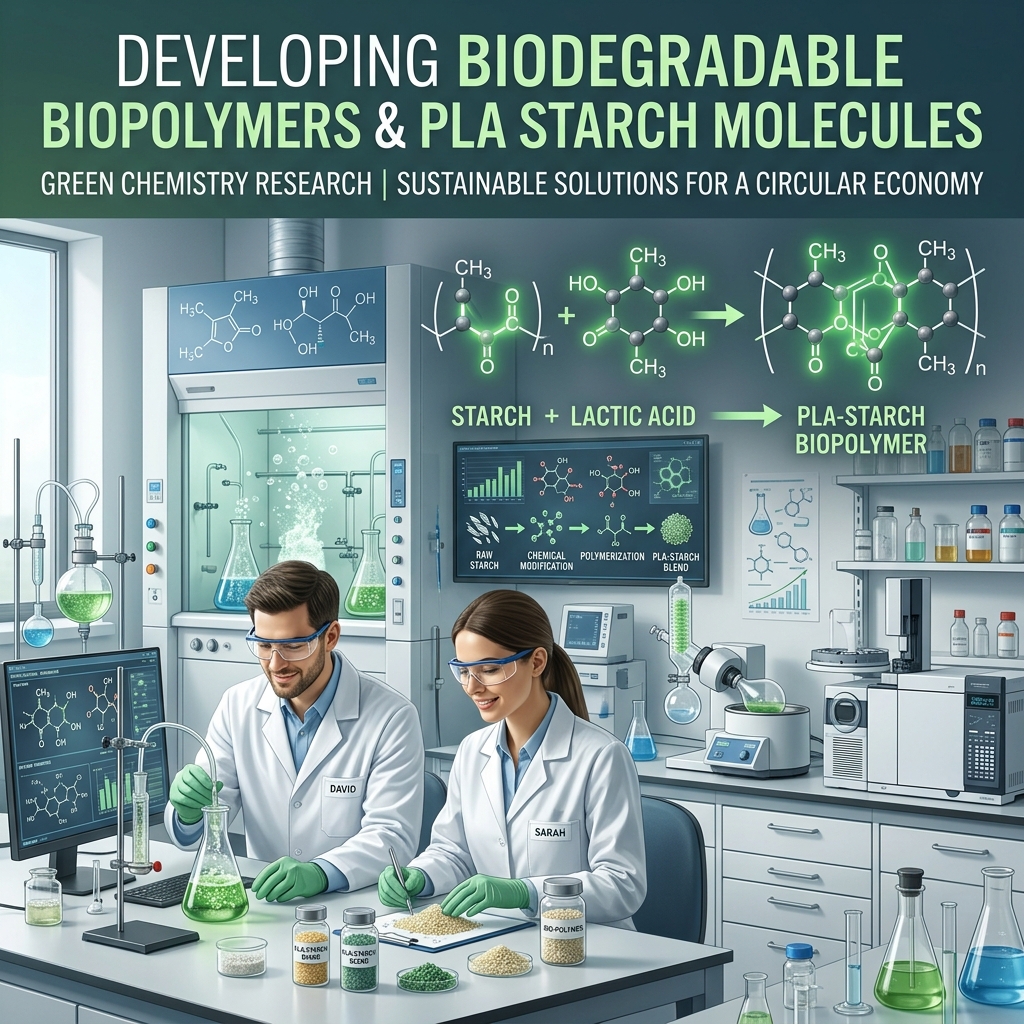
A detailed molecular and structural comparison of starch-based polymers, PLA, PHA, and conventional petroleum-derived synthetic plastics.
The distinction between conventional polyolefins (such as LDPE, HDPE, PP, and PET) and modern biopolymers lies in their chemical backbone and end-of-life degradation pathways. While fossil-based plastics possess long-chain hydrocarbon structures that resist environmental microbial breakdown for centuries, biopolymers incorporate natural ester bonds susceptible to enzymatic hydrolysis.
Classification of Biopolymers
Biopolymers are broadly categorized into three distinct families based on origin and manufacturing route:
- Bio-based, Biodegradable: Polylactic Acid (PLA), Polyhydroxyalkanoates (PHA), and Thermoplastic Starch (TPS) derived from renewable agricultural biomass.
- Petroleum-based, Biodegradable: Polybutylene Adipate Terephthalate (PBAT) and Polycaprolactone (PCL) engineered for specific elasticity and tensile blending.
- Bio-based, Non-Biodegradable: Bio-PET and Bio-PE synthesized from sugarcane ethanol, preserving conventional recyclability pathways.
Processing Adaptations for Packaging Converters
Converter units modifying blown film lines or injection molding machinery for compostable resins require specific temperature control and screw L/D adjustments. BCPAI offers direct technical training to machinery operators across West Bengal and Eastern India to optimize throughput while maintaining film clarity and barrier properties.