Executive Summary:
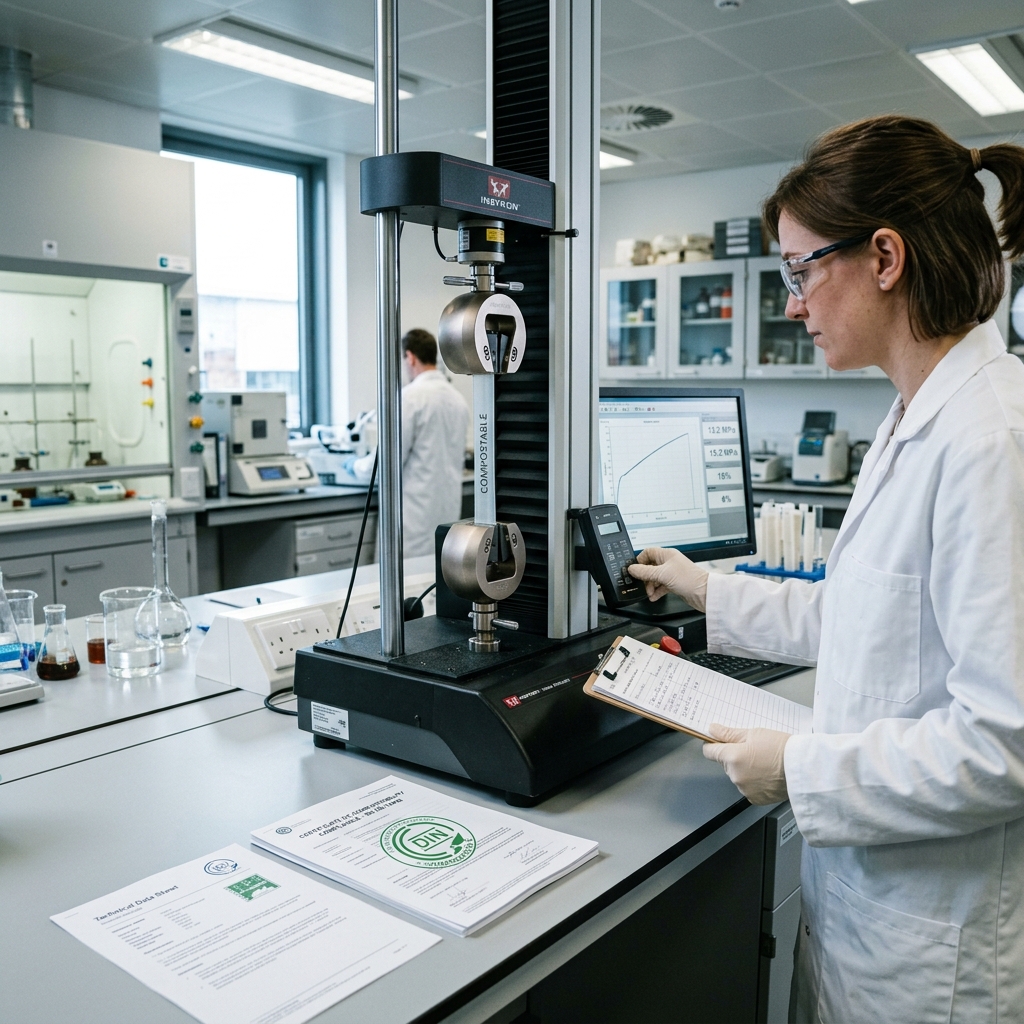
Step-by-step walkthrough of mandatory test protocols required by CIPET for obtaining official CPCB manufacturer certificates.
To ensure transparent marketplace credibility and protect consumers from misleading greenwashing, regulatory oversight for compostable carry bags, garbage liners, and food containers in India is governed by strict technical parameters under IS/ISO 17088:2021.
Mandatory Testing Protocols
Every commercial resin compound or finished compostable item must complete a four-stage empirical laboratory evaluation:
- 1. Chemical Characterization: Quantification of total organic carbon, volatile solids, and strict thresholds for heavy metal content (e.g. Lead, Cadmium, Arsenic, Mercury).
- 2. Ultimate Aerobic Biodegradation: Minimum 90% organic carbon conversion to carbon dioxide within 180 days under controlled composting conditions at 58°C.
- 3. Disintegration Test: At least 90% physical breakdown of material through a 2mm sieve within 12 weeks.
- 4. Ecotoxicity & Plant Growth Assay: Post-composting seedling germination trials to prove zero phytotoxic impact on soil fertility.
BCPAI assists members in sample compilation, documentation preparation, and pre-testing quality checks prior to submission at national testing institutes.
Category:
Statutory Compliance